2021 Conference on Diversity in International Affairs
Event date
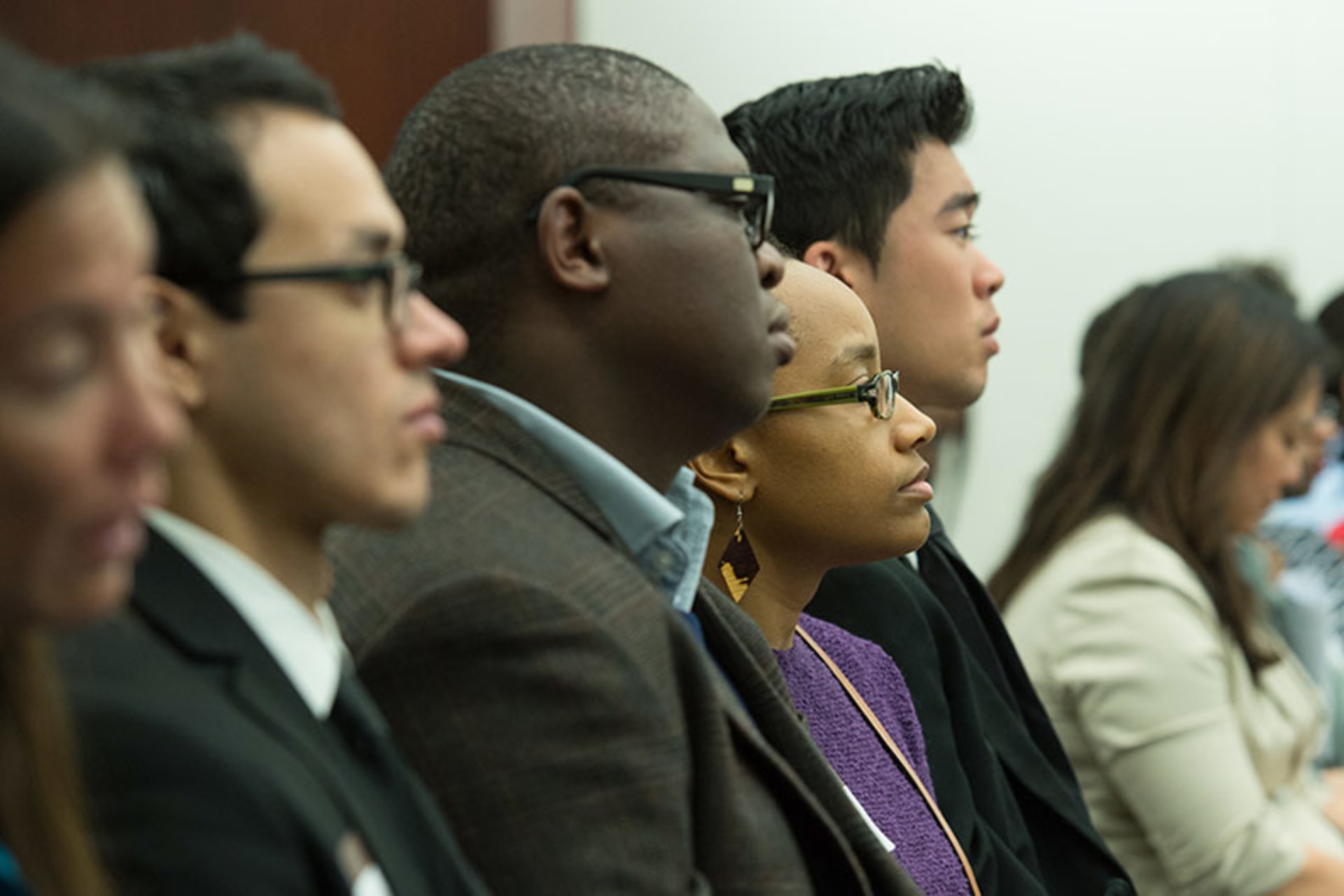
The Conference on Diversity in International Affairs brings together college and graduate students and young professionals from diverse backgrounds for plenaries on foreign policy topics, seminars on professional development, and opportunities to interact virtually with senior foreign policy professionals. The 2021 conference featured a keynote session with President of the Ford Foundation Darren Walker.
The 2021 Conference on Diversity in International Affairs is a collaborative effort by the Council on Foreign Relations, the Global Access Pipeline, and the International Career Advancement Program. For information about the conference in previous years, please click here.
Race and Policy: America’s Standing in the World
The murder of George Floyd last summer catalyzed an anti-racism protest movement that echoed around the world. Global protests, mostly in support of Black Lives Matter, lasted for months and were reignited this year after increased attacks on Asian Americans and other communities of color. This panel discussed the direct relationship between race, racism, and U.S. policy; the role of protests and the media in prompting discourse about that relationship; and how racism at home affects U.S. credibility abroad.
Speakers
- Karen AttiahGlobal Opinions Editor, Washington Post
- Andrew KimU.S. Representative from New Jersey (D-NJ-03), U.S. House of Representatives
- Keith B. RichburgDirector, Journalism and Media Studies Centre, University of Hong Kong
Presider
- Reena NinanFounder, Good Trouble Productions; Former Anchor/Correspondent, CBS News
Introductory Remarks
- James M. LindsaySenior Vice President, Director of Studies, and Maurice R. Greenberg Chair, Council on Foreign Relations; @JamesMLindsay
Transcript
LINDSAY: Hello, everyone. I’m Jim Lindsay, senior vice president and director of studies at the Council on Foreign Relations. It is my great pleasure to welcome you to the ninth annual Conference on Diversity in International Affairs. Today’s event is jointly presented by the Council on Foreign Relations, the Global Access Pipeline, and the International Career Advancement Program. America’s ethnic and racial makeup has changed dramatically in recent decades. The ethnic and racial makeup of America’s foreign policy community, however, has not. The composition of the U.S. foreign policy community is not likely to change significantly without a concerted effort to identify talented members of underrepresented groups, expose them to career possibilities in foreign policy, and actively recruit them for positions. We hold the Annual Conference on Diversity in International Affairs to help make that happen. We want to celebrate America’s diversity in the fact that we as a country have ties to virtually every country around the globe, which is a great strength and a complex and ever-changing world. You want to lift talented voices, the unique perspectives that are not being heard, and make them part of the foreign policy debate. We urge all of you to follow...
Networking Hour: Day One
Keynote Session: A Conversation with Darren Walker
Darren Walker discussed his experience spearheading organizational change in the field of philanthropy and foreign policy and the lessons he has learned along the way, including his work championing diversity at high levels, navigating the COVID-19 crisis, and his thoughts on the future of the workforce.
Speaker
- Darren WalkerPresident, Ford Foundation
Presider
- Kal PennActor; Former Associate Director of Public Engagement, White House
Introductory Remarks
- Richard HaassPresident, Council on Foreign Relations; Author, The World: A Brief Introduction; @RichardHaass
Transcript
HAASS: Well, thank you, and welcome one and all. Welcome to today’s meeting, which is the keynote session of this year’s Conference on Diversity in International Affairs. This is our ninth annual conference. And planning has already begun for our tenth. Yesterday, you heard from my colleague, Jim Lindsay, about why diversity in this field matters so much. I won’t repeat all that he said. But as someone who’s worked in the U.S. government quite a bit in the course of my career—I worked at State, I’ve worked elsewhere—I really do think that it’s important that our personnel reflect the country that they are representing. We need the perspectives. And I just think that it’s who we are. And it’s why we’re doing so much to increase the pool, to build the pipeline of the next generation of foreign policy professionals. Let me just mention a few things we’re up to.
One is our paid internship program, which allows students from all sorts of diverse backgrounds to spend time at the Council. We’re also introducing a permanent remote element. We have about 110, 120 internships a year. When you think about it and then do the math over a decade,...
Nationalism Around the World
This panel focused on the rise of global nationalism and its effects on marginalized populations around the world who are often excluded from a popular national identity, including nationalist movements in England, Germany, Spain, France, and India, as well as campaigns elsewhere against religious and ethnic minorities. This meeting discussed the popularity of these movements and how their political success has exacerbated racial, religious, and cultural divides within these countries.
Speakers
- Kanchan ChandraProfessor of Politics, New York University
- Heather ConleySenior Vice President for Europe, Eurasia, and the Arctic; and Director, Europe, Russia, and Eurasia Program, Center for Strategic and International Studies
- Kehinde A. TogunSenior Director for Policy and Government Relations, Humanity United; Adjunct Lecturer, Political Science, Rutgers University
- Arturo A. ValenzuelaEmeritus Professor of Government and International Service, Georgetown University
Presider
- Farah PandithAdjunct Senior Fellow, Council on Foreign Relations; @Farah_Pandith
Transcript
STAFF: This event is presented by the Council on Foreign Relations.
PANDITH: Well, good afternoon to everyone. Welcome to the second plenary session for the Council on Foreign Relations 2021 Program on Diversity in International Affairs. I want to welcome our distinguished panel to our session on nationalism around the world, a very small topic. And the four experts that are with us, we’re really honored to have here at the Council, so I want to thank them for taking part. Arturo Valenzuela is at Georgetown. Heather Conley is at CSIS. Kanchan Chandra is at NYU. And Kehinde Togun is at Humanity United. You have all of their bios in your packets. My name is Farah Pandith, and I’m an adjunct senior fellow at the Council and I’ll be presiding over the session today. Our hope is to have an engaged conversation with the panelists, but also engage you in the conversation through the questions at about the twenty-five, thirty-minute mark. So be thinking about that and I’ll give you instructions on how to take part at that time. Let’s begin with a definition of what a nation is and what a state is, so that we’re all...
Making the Transition Between the Public and Private Sector
Panelists discussed best practices from their experience for transitioning between the public and private sector.
Speakers
- Dominique CarterAgricultural Science Advisor, U.S. Department of Agriculture
- Rashida PetersenRegional Director, East, Global Fund for Women
- Macani ToungaraSenior Advisor, Africa, U.S. Agency for International Development
Presider
- Catherine EngPublic Policy Manager, Facebook
Transcript
ENG: Good afternoon, everyone. Welcome to today’s Council on Foreign Relations Conference on Diversity in International Affairs. This session is on making the transition between the public and private sectors. I’m Catherine Eng and I’ll be presiding over today’s discussion. We’re very excited today to have three well-respected professionals who are inspirational leaders in their roles and communities. They’re each going to discuss their backgrounds and how they got to where they are today. We hope to shed some light and guidance on how to navigate transitioning between the public and private sector as well as the importance for diversity in foreign affairs. Firstly, let me briefly introduce our speakers.
Dr. Dominique Carter is an award-winning scientist, science diplomat, and entrepreneur, recently named among 1,000 inspiring Black scientists in America by Cell Mentor. Dr. Carter currently serves as an agricultural science advisor for the Department of Agriculture, Office of the Chief Scientist, where she supports operational planning and policy development pertaining to agricultural research and education. Dr. Carter was awarded the prestigious AAAS Science and Technology Policy Fellowship at the National Science Foundation and is the founder of Global STEM Solutions, a boutique-consulting firm that provides thought leadership and counsel...
Building Your Brand
Speakers
- Hagar Hajjar ChemaliHost, Oh My World! With Hagar Chemali; CEO and Founder, Greenwich Media Strategies; Nonresident Senior Fellow, Atlantic Council
- Latoya PetersonChief Experience Officer and Cofounder, Glow Up Games
Presider
- Jessica P. AshoohDirector of Policy, reddit Inc.
Transcript
ASHOOH: Thank you so much. Welcome, everybody to today’s Council on Foreign Relations meeting Conference on Diversity in International Affairs concurrent session on building your brand. I’m Jessica Ashooh and I’ll be presiding over today’s discussion. We’re joined today by two fascinating women. Hagar Chemali is founder and CEO of Greenwich Media Strategies, which she founded after a twelve-year career in the U.S. government that included stints in the White House National Security Council, the U.S. delegation to the UN, and the Department of the Treasury. Latoya Peterson is cofounder and chief experience officer at Glow Up Games. A storytelling technologist, she’s also the founder and editor of racialicious.com, a Technorati top 5000 blog. She’s also worked in numerous traditional media roles, including at ESPN fusion and Al Jazeera English. Warm welcome to both of you.
Now we’ve got a relatively younger audience today, including many who are just starting out in the workforce or earlier in their careers and they’re facing the notion of having to brand themselves for the first time. Hagar, I’ll direct this one to you first, and then turn to you, Latoya. How do you go about starting a new personal brand? This is something...
Pandemics and the New Way of Working
Speakers
- Nayyera HaqChief Foreign Affairs Correspondent, Black News Channel
- Emerita TorresVice President of Policy, Research, and Advocacy, Community Service Society of New York
Presider
- David R. MartinezHead of Latin America, Strategic Response Policy, Facebook
Transcript
MARTINEZ: Good afternoon everyone and welcome to today’s Council on Foreign Relations meeting here at the Conference on Diversity in International Affairs. This is a concurrent session on pandemics and the new way of working. I’m David Martinez and I’ll be presiding over today’s discussion. Let me say first of all, it’s fantastic to be back here with all of you. And I want to express a particular gratitude for those who may be working from home, as it’s particularly pertinent to the topic we’re facing today. Half a century ago, science fiction author and futurist Arthur C. Clarke presciently said, “Trying to predict the future is a discouraging, hazardous occupation.” It’s safe to say that most of us sitting here today probably did not predict the COVID-19 pandemic and, if we’re being honest, most of us probably could not have predicted how it would have affected our work so profoundly. And yet, the nature of work has often been deeply impacted by both slower developing processes, think of the Industrial Revolution, and by sudden impactful events such as wars, famines, and, yes, pandemics. Such will be the focus of today’s discussion and with such a broad and complex topic,...